Sunday, April 01, 2007

Up or Down?...The March Real Estate Market Update

Hot off the "Actual Statistics" press, it is now time for my MARCH update of how the real estate market is faring in my area of the country - the Massachusetts North Shore, north of Boston.

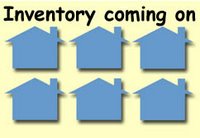
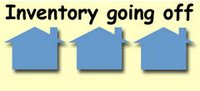
In January, I wrote a blog entitled "Knowing Exactly When the Market will Change" that received many comments, replies and supportive feedback. In that blog, I stated that as soon as we have 3 consecutive months when more inventory is going off (under contract) than is coming on (new listings) we can expect to once again experience an appreciating market. So where do we stand so far this year?


In JANUARY, in my 22 town Massachusetts North Shore area, 404 single family homes came on the market and 209 single family homes went under contract (off market).

In FEBRUARY, 377 single family homes came on the market on the North Shore and 242 homes went under contract.

In MARCH, 543 single family homes came on the market on the North Shore and 256 homes went under contract. That's more than TWICE as many coming on vs. going off.

The message: Real estate values will continue to decline until this trend reverses. Part of the solution? Sellers need to recognize that it is no longer 2003 and price their homes ahead of the declining price curve.

I will provide another update again in the beginning of May and we'll take a look and see if the market is changing or if we can expect more of the same for a while.

Friday, March 30, 2007

Supply and Demand

Have you ever heard someone say "They're not making any more land!" They probably mean to say that since there's only a limited supply of land available, the price goes up as the supply goes down.

That IS the way prices are set on land and housing. As demand for housing in a particular area rises, with a limited supply available for purchase, prices also rise. If there is an over-supply coupled with little demand, prices will fall.

The location of land can also make a difference in the price the public is willing to pay. A home located near shopping, schools, and recreation in a growing city may bring a higher price than one located on the fringe of town away from family activities.

Another phenomenon of valuing real estate is the principle of "highest and best use." Under this concept a house on a corner lot currently used as a family residence might, if located near a business district, be worth much more as the location for a restaurant or other business if the house is removed and replaced with a commercial building.

You can imagine how many other factors might cause the value to change as well. Learning to place a value on homes and land is a skill learned from long experience. Don't leave the pricing of your home to chance. Use the skills of the best real estate agent available.

Friday, March 23, 2007

Five Pricing Pitfalls

When it's time to sell your home, it's very easy to be snared in the overpricing trap. After all, you want top price for your home, don't you? And we all know that prices have risen dramatically in recent years. Given that, it's logical that the asking price you set could be higher than "fair market value." Unfortunately, you probably won't realize it's too high until much later.

Here are just a few of the disappointments you'll be facing with an overpriced house:

  1. Responses to your ads will probably be slow, since the public recognizes overpricing. Remember, people buy by comparison.
  2. Some prospects who are attracted may be the wrong ones. They will be attracted because they're looking for a home priced the same as yours – but with MORE features.
  3. Very few buyers will even make an offer on an overpriced home. The reason? Even if you accept their lower offer, they aren't getting a bargain since the final price is probably no less than "fair market value."
  4. Your home will help buyers make a favorable decision on other homes that are priced fairly. Do you really want to be the example that drives people elsewhere?
  5. If you do find a buyer at your price, their mortgage application could be rejected because of a low appraisal; the house simply doesn't meet the standards that the price indicates.

This all sounds rather bleak, so what can you do to solve the pricing issue? Work with an experienced professional who knows the market in your neighborhood. Take advantage of the research and advice your real estate agent can offer, and you'll be on your way to setting the right price for your home.

Friday, March 16, 2007

Go Ahead…Take the First Step!

When you're ready to buy a home, what's the first step you'll need to take? Start looking at homes? No, here's a better suggestion.

You probably have a pretty good idea of what type home you'll be wanting to buy, don't you? Do you know how many bedrooms and baths will be needed? What style home do you prefer and in what location?

Do you know how much home you can afford to purchase, how much cash you have available for a downpayment, and what monthly payments will be satisfactory?

Once you know the answers to all these questions, your first step should be in the direction of the office of the best real estate agent you can locate. You see, there are numerous details involved in locating the right property for you. Those details center around the agent's knowledge of your family's wants and needs. That's why it's so important to meet first at the agent's office, then plan to inspect homes.

During the first meeting with your agent you'll have the opportunity to explain the importance of school locations, shopping, and other amenities; close proximity to your employment may also be a factor in making your housing decision.

By understanding your living style, your real estate agent can choose a variety of homes for you to see. Then you can be confident that the home you purchase will have what is important to you and your family, now and in the years to come.

Friday, March 09, 2007

One is Enough!

When you are ready to buy a home, how many real estate agents should you use to find the perfect home – one, three, five? A recent survey showed that 79 out of every 100 buyers use only one or two agents before they find a home. But perhaps the best answer is one and only one. Here's why.

First, it's important to understand that real estate agents are business people with a very special talent. That talent is the ability to really understand the needs of their homebuyers. After listening carefully and asking questions, the agent can ferret out and identify specific homes which meet those needs, and then help the homebuyers complete the purchase of the home of their dreams.

Thus, success as a real estate agent is contingent upon serving all the homebuyer's needs. This includes offering a wide selection of homes from which to choose, and being able to provide a wealth of knowledge in areas such as financing, construction, taxation, and the complexities of today's real estate closing.

Secondly, once you have found such a dependable sales agent, the need for a second one vanishes into thin air. After all, how many homes will a typical buyer purchase?

Take whatever time is necessary to locate that "right" agent in the beginning, before you start house hunting. When interviewing an agent, question their success, and assure yourself that you'll be receiving only top quality service. Then put them to work for you – exclusively!

Tuesday, March 06, 2007

When Will the Market Change - February Update

In January, I wrote a blog entitled "Knowing Exactly When the Market will Change" that received many comments, replies and supportive feedback. In that blog, I stated that as soon as we have 3 consecutive months when more inventory is going off (under contract) than is coming on (new listings) we can expect to once again experience an appreciating market.

So where do we stand so far this year? In January, in my 22 town Massachusetts North Shore area, 404 single family homes came on the market and 209 single family homes went under contract (off market).

In February, 377 single family homes came on the market on the North Shore and 242 homes went under contract.

February was better, certainly, than January, but not enough so that we can say the current trend has reversed. So based upon the statistics thus far this year, we continue to remain in a depreciating (buyers) market . . . and we can expect it to remain a buyers market for at least 3 more months.

I will provide another update again in the beginning of April and we'll take a look and see if the market is changing or if we can expect more of the same for a while.

Regards,

Jay Burnham, VP
Coldwell Banker Residential Brokerage
North Shore, Massachusetts

Friday, March 02, 2007

Curb Appeal = Buyer Appeal

I'm sure you've heard the saying "You only get one chance to make a great first impression." Sure, it's a bit of a truism, but that's because there's a lot of truth in it. Here's some information to improve your chances of making that great first impression with buyers when selling your home.

Take a look at the exterior of your home from across the street, the way a buyer might view it. Start with the yard. Is it in order, and neatly trimmed? Is the yard absolutely free of trash or other discarded items?

Next, look at the windows. Are all screens or storm windows in place? Are there any broken panes of glass that need replacing? Are they sparkling clean?

Now, on to the exterior of the house itself. Is the exterior in good repair? Are gutters and downspouts in good shape? Is paint needed?

Do you get the idea? Look at your house the way the buyer would, then become your own worst critic. Try to find all the visible faults your home currently exhibits – then get them corrected! This is where your professional Realtor® can help, too, with suggestions and an unbiased opinion. And by all means, do this before you offer the house "For Sale." Making apologies after the fact does nothing to improve that first impression.

Did you know that many buyers make the decision to inspect the inside of a home based on their ten-second appraisal of the outside as they drive by? It's true! When that happens, your house either scores high or low on the buyer's scorecard. By the way, low scores invite low offers.

Take the time to give your home an exterior inspection, listen to your agent's suggestions, then do whatever it takes to improve your curb appeal. Invest in that first impression, and the result will be more showings and better offers.

Thursday, February 22, 2007

Great Party - No Friends!

Imagine giving a great party for your closest friends. To save the expense of printing you buy some generic invitations. To save time you write "occupant" on the envelope and ask the post office to see that they get delivered.

When the time for your party arrives, you are in for a surprise. As guests begin arriving, you don't recognize any of them. You had planned a black-tie affair, but they're dressed for a back-yard barbecue. Before long, you realize they are perfect strangers, not at all the guests you had planned to entertain.

Sounds ridiculous, doesn't it? Yet, when homeowners decide to sell "by owner," they create a similar scenario. The generic sign appears in the yard as an invitation to complete strangers to knock on the door at all hours for information. The other invitation, an ad, goes in to the local newspaper.

The "guests" arrive right on time, too. They are an interesting collection of bargain hunters, investors, and "tire-kickers." Each plans to feast off the homeowner's equity – by making a low offer to purchase the home or, in the case of the tire-kicker, to just enjoy the free hospitality.

When it's time to sell your home, choose an agent who understands the invitation process. "Black-tie" buyers work with agents who can introduce them to homes that are the "talk of the town."

Wednesday, February 21, 2007

Knowing Exactly When the Market Will Change

How would you like to know when the real estate market has hit the bottom and prices can be expected to appreciate again? Wouldn't that knowledge be worth a great deal? Well, believe it or not, I can tell you when that will happen. And if you want, I will share my knowledge with you.

You see, it's actually not all that difficult to forecast. The reason for our current depreciating real estate market is simply that more homes are coming ON the market than are going OFF the market. About 19 months ago in the area I sell real estate (the Massachusetts North Shore), for the first time in more than 10 years, more homes came on the market than sold. And this trend then continued for the next three months. That was the beginning of the decline in home values on the North Shore and we quickly went from a Seller's Market to a Buyer's Market. The trend continues today with 404 new (single family) listings coming to market in January on the North Shore (22 towns) and only 209 properties going Under Contract.

So . . . Still want to know when prices will begin appreciating again? Quite simply, when we have three consecutive months when more homes are selling than are coming on the market the trend will have reversed and you can expect the return of an appreciating (Seller's) market.

I carefully track the inventory data every month so that I will know and be ready for the shift. If you would like to be ready as well, feel free to contact me. I am pleased to share the data and with it the knowledge of when the market will change.

Regards,

Jay Burnham

Friday, February 16, 2007

How Do You Conduct a Harmonious Sale?

When you sell your home, how many individuals will have an impact on the final sale, the closing date, and the amount of money you receive from the sale? Five? Ten?

You may be surprised to know there are over twenty of them:

  • Your real estate agent
  • The buyer
  • The buyer's spouse
  • The buyer's attorney
  • The lender
  • The lender's attorney
  • The loan originator
  • The loan processor
  • The loan underwriter
  • The credit bureau
  • Home inspectors
  • Termite inspectors
  • Your attorney
  • The Registrar of Deeds
  • The local property tax authorities
  • The federal government
  • Title insurers
  • Property insurers
  • Escrow agents
  • The buyer's employer
  • The buyer's creditors
  • Bankers
  • And numerous others!

Just imagine how difficult it must be to coordinate the activities of each of these individuals so that the final result is the satisfactory sale of your home, at the right price for you. Is there any one person who can oversee the entire process for you and make it happen?

There is one person, the first on the list – your professional real estate agent. Choosing your agent carefully can be compared to selecting a conductor for symphony orchestra. That single individual can blend together many musicians playing different instruments, each of which plays a different tune, and produce a harmonious and gratifying concerto – a pleasant and profitable home sale for you!

Sunday, February 11, 2007

A Commodity in Danger of Becoming a Liability

Have you noticed that many For Sale signs (especially on the Massachusetts North Shore) appear to have put down roots on the front lawns of the homes for sale? And how about the number of signs dotting our neighborhoods? It's staggering!

In some instances, it appears that the only people that are not clear on the direction the real estate market has been going for the past 18 months are the ones with the "rooted" For Sale signs. You see, homes are still selling at a decent pace on the North Shore. But frequently it is the new listings that are accounting for the sales.

Why? . . . Because they have been priced correctly on day one, without the extra 5%+ "wiggle room" sellers traditionally added on when prices were appreciating. In fact, the very smart sellers today are often reversing that old trend and choosing to price their homes slightly BELOW what appears to be the Fair Market Value at the time they put their homes on the market. The result? Many such homes are actually receiving multiple offers (you heard correctly!) and sometimes even selling OVER asking price. The point, however, is that they are sold.

So if your home has been been lingering on the market with a rooted For Sale sign out front, perhaps it is time to speak with someone who can tell you what you need to know instead of what you want to hear. Call me and let's talk about how to avoid the danger of your home becoming a liability.

Regards,

Jay Burnham, VP
Coldwell Banker Residential Brokerage
Direct: 978.233.2828

Friday, February 09, 2007

20/20 Perception!

Beauty is in the eye of the beholder. Each of us sees the world with a different set of eyes, don't we? So of course, we each view it differently.

The same holds true for buyers for your home. The buying public comes from every conceivable walk of life, and each individual is looking for something special. Some buyers look for convenience in a home, some look for beauty, and some for practicality.

Based on their own set of life values, buyers each have a different yardstick by which they measure your home and the final price they would consider paying for it.

Real estate agents understand the many variations in buyer personalities, and can provide you with an accurate picture of your home's likely final sales price. Then, by applying that price to your home, your agent can locate the most likely buyers.

Your agent will show you prices at which similar homes have sold, and will be prepared to discuss the features your home offers that would be attractive to the many available buyers. By creating a marketing plan which accents your home's strong points, your agent will position your home so that it attracts buyers who are likely to be a good match.

Pricing and presenting your home favorably are just two of the benefits you receive from the agent with "20/20 perception." Want to know more? You can find me/fax me/voicemail anytime: 978-233-2828

Friday, February 02, 2007

Keep In Touch!

You've just listed your home "For Sale." As your agent is leaving, you shake hands, then say to the agent, "Keep in touch!"

To an active, dedicated real estate agent, "Keep in touch!" means much more than just "call me now and then." Keeping in touch is what your agent does best – but not just with you. Finding the right buyer for your home involves continual contact with a variety of people, letting them know about your home and encouraging them to refer buying prospects.

The activity of your agent in a single week can be impressive. Interacting with a wide variety of individuals, your agent is able to generate broad exposure for your home, an element that is critical to locating buyers. Those contacts might include bankers, surveyors, courthouse personnel, mortgage loan officers, local insurance people, appraiser, tax collectors, other real estate agents, local merchants, and lawyers.

Since each of these has a wide circle of contacts themselves, your agent quickly gains the attention of many who can and will refer buyers for your home.

Placing advertisements in the newspaper, a sign in front of your home, and adding your listing to the website are all important. However, the behind-the-scenes activity carried on by your agent supplements and reinforces the process of locating buyers interested in your home.

Look for dedication, commitment, and total involvement in a real estate agent. Buyers will follow!

Thursday, February 01, 2007

Mass North Shore High End Homes are Moving!

Considering that the trend for home values on the Massachusetts North Shore real estate has been the lowering of prices for about 18 months, it is encouraging to note that a certain sector of the market is moving along at a steady pace. I'm talking about homes priced over $1 million.

And in the "even higher" category of 2+ million homes, the news is even more exciting. In the towns of Beverly, Gloucester, Hamilton, Manchester, Rockport, and Wenham, 20 properties priced at $2 million or higher have sold or been put Under Agreement since September 1, 2006!

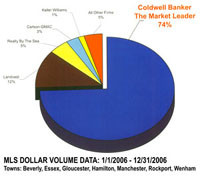
Of these 40 transaction SIDES (there are two for each sale...the List Side and the Sale Side), Coldwell Banker has participated in 24. That's an incredible 60% market share held by Coldwell Banker for that time period. Our next closest competitor achieved only 12.5% market share during that period.

On an annual basis (1/1/2006 - 12/31/2006), Coldwell Banker's North Shore market share stands tall at 74% (see pie chart) in the over $2 million range, which begs the question, "Why would anyone in that price range even consider listing with any other company?"

The reason for our unrivaled success?

A lot of it naturally has to do with the success of our brand, but beyond that Coldwell Banker has the best trained agents in the industry and the resources to provide true cutting edge systems and processes designed to market our clients' homes to the widest possible audience. More buyers = more sales = better value for our clients.

Sometimes it's nice to have the "800 lb. gorilla" on your side, especially when it comes to marketing and selling an asset as valuable as your home.

Thinking of selling? You owe it to yourself to discover how our unique marketing system will help you achieve your real estate goals. You can call me direct to schedule a confidential interview and analysis of your property's value.

Regards,

Jay Burnham, VP
Coldwell Banker residential Brokerage
direct: 978-233-2828


Saturday, January 27, 2007

Mass Housing Market Ends Worst Year in Decade

Here's a report without the usual "spin" or "happy face" customarily displayed by those in our industry that refuse to face/disclose the facts.

The following was reported in the Boston Globe's Business section on January 26th, written by Kimberly Blanton:

Massachusetts house prices tumbled 5.4 percent in December, in a sour endnote to the worst year for the state's housing market in a decade.

Amid new evidence the state is still struggling to emerge from the housing downturn, economists said it is likely prices for single-family houses will continue to decline this year. Single-family sales for 2006 were 41,593, which was the lowest total since 1996, according to the Massachusetts Association of Realtors, which released its monthly market report yesterday.

"We're working through the correction," said Larissa Duzhansky, an economist with Global Insight, a Lexington economics and consulting firm. She predicted, "We're going to see home prices going down in 2007."

The backdrop for Massachusetts' woes was the biggest one-year drop in home sales nationwide since 1989, 8.4 percent.

The Northeast and the West Coast were hit particularly hard, the realtors association said. That offset higher sales in housing markets in the South and Midwest, fueling speculation that the housing market may be dampening economic growth.
For single-family houses, last month's price drop was the steepest since last summer, and the pattern of double-digit monthly sales declines each month continued. December's sales dropped 16.6 percent from a year earlier, to 2,980. The report is for sales closed last month and reflects purchase-and-sale agreements signed in October or November.

Jim Gibbons, an agent for Remax Landmark in Stoughton, said "It's going to be the same story this year -- big inventories, big selection". Your house has to be the best house out there in the best condition and priced aggressively, or it's going to sit."
The state realtor association said the supply of houses is now at 10.3 months, two months more than a year ago.

Gibbons said the current situation -- a flood of houses for sale -- is unique because there are so many types of sellers in the market. In addition to those who want to trade up, there are investors trying to dump properties purchased three or four years ago at higher prices, homeowners unable to meet rising payments on adjustable-rate mortgages or threatened with foreclosure, and empty-nesters eager to downsize.

"We've never had that at the same time," he said.

Friday, January 26, 2007

Price - The Real Question?

When you sell your home, who sets the price and at what level? How can you be sure the price is not too low…or too high?

First, as the homeowner, you set the price on your own house. The agent you choose will provide useful information to help you decide on a price, however the final decision will be yours.

To make a valid price decision, three types of accurate information are needed, all of which can be provided by your agent. They are:

  1. Recent sales prices of similar homes already sold,
  2. Prices of similar homes currently being offered For Sale, and
  3. Prices of similar houses which have been taken off the market because they didn't sell (expired listings.)

Each set of prices should play an important role in the price decision on your home. The first, homes already sold, is most important because it tells what buyers have been willing to pay for similar homes.

The second, homes For Sale now, gives you a targeted price range. These are the homes with which yours will be competing.

Finally, homes off the market tell you what buyers are NOT willing to pay for a home like yours.

Compare the condition and amenities offered by your home with those already sold and currently For Sale. The highest price for your home, one acceptable to buyers, will very likely be midway between the two.

The price you set will either help or hinder the sale of your home. As a Realtor® I have the detailed, current information on the market in your area, along with years of experience and knowledge. I will work with you to set the best price to attract buyers, and change your "For Sale" house to "Sold."

Thursday, January 25, 2007

Single-Family Home Sales, Prices Drop in December

Massachusetts single-family housing sales had their worst December since 1991, and the median sale price fell 8.1 percent to $310,000 in December 2006, the lowest monthly figure since March 2004, according to a report by the Warren Group, a Boston provider of real estate data and the publisher of Banker & Tradesman.

December single family-home sales fell 8.4 percent from December 2005 to 4,037, the lowest level for the month since 1991. For all of 2006, single-family home sales dropped 14.4 percent to 54,203, the lowest since 1995, and down 20 percent from the peak in 2004. The Median sales price droped 5.8 percent to $325,000 in 2006; the first annual drop since 1993.

In other area news that has attributed to the above conditions...

Land use restrictions in metro Boston among the most stringent in U.S.

A new study examining land use regulations in more than 2,600 communities across the U.S. found that Boston and its immediate suburbs impose some of the most restrictive rules on residential construction in the nation. The study, conducted by the University of Pennsylvania's Wharton School of Business, ranked Boston and 40 nearby cities and towns as second only to the Providence, R.I. area among 47 metropolitan markets in terms of severity of regulation placed on housing development.

This heavy regulation is contributing to the region's high housing prices and helping to limit the local housing supply, which in turn is prompting young professionals and working-class families to leave the state in increasingly larger numbers, according to the study's authors. These findings come as little surprise to local REALTORS® and help to validate the public policy efforts undertaken by the Greater Boston Real Estate Board, in recent years to support legislation aimed at expediting permitting processes and reducing the amount of zoning and land-use controls placed on residential and commercial development in the Commonwealth.

The Boston area's high ranking is attributable in part to minimum lot size requirements that are much larger here than in communities in the South and Midwest, as well as the prominent role local elected officials, neighbors and community groups are often given in reviewing residential projects and zoning proposals. In many Bay State communities, it's not uncommon for municipal zoning departments, boards of health and other elected officials to impose excessive regulatory controls on residential development to limit growth, reduce housing density, or preserve open space, the report found.

Sunday, January 21, 2007

Limited Service Brokerage = Limited Value

How does limited service representation affect a property's time on the market and selling price? Research sponsored by the Texas Real Estate Center revealed that limited service representation can indeed have significant impacts.

Limited service representation and discount brokerages in single-family residential markets have been widely scrutinized by the real estate industry. The Internet portal Yahoo! moved from the sixth most visited real estate website to second (behind realtor.com) through its series of partnerships with limited service and discount brokerages. Some of these brokerages offer consumers menu-based pricing, with fees for specific services, such as listing the property on a MLS system, rather than an across-the-board fee for full representation. Others advertise sharply lower com
missions while still promising to provide consumers with all of the traditional services.

Limited Service Research Results

Most of the study results were statistically significant, indicating valid relationships exist between limited service representation and marketing performance (time to sale and sales price). The empirical results show that limited service listings sold for 1.7 percent less than typical exclusive-right-to-sell listings and took 17.1 percent longer to sell. Given that the typical discount offered by limited service brokers is approximately 2 percent, there does not appear to be any net gain to sellers using limited service representation.

For example, if the limited service broker charges a total 4 percent commission, then the commission plus the 1.7 percent lower price is approximately equivalent to a 6 percent commission from the seller's perspective. This would indicate that limited service brokerage offers no dollar advantages to the seller over typical brokerage when using the exclusive right to sell contract.

If "time on market" is taken into consideration as well, then limited service brokerages could actually COST the seller depending on the fixed costs of carrying the property on the market (mortgage, maintenance, etc.).

But what about agent experience?

Other research has shown that agents with limited service brokerages, either no service or menu-based-pricing, tend to be less experienced than those with traditional brokerages. The Texas Real Estate Center study revealed Sellers using listing agents with less than two years of experience received 1.1 percent less for a house compared with sellers who used agents with two to five years of experience, and the marketing time was 1.9 percent longer. While 1.1 percent may not seem to be a large amount, it represented more than $1,900 for the average property in the study. If the listing agent had more than five years of experience, the seller received 0.8 percent more than sellers who used agents with two to five years of experience, and the property sold 1.5 percent faster.

Source:
Texas Real Estate Center and fellow CyberStar Christina Whipple, Alamo, Texas

Friday, January 19, 2007

Outgrowing Your Home?

Has the time come to make some tough decisions? If you've outgrown your present home, there are two questions to ask yourself: Should I add on to my present home, giving me the needed extra room or amenities, and allowing me to stay where I am? Or should I sell and purchase another home that already has the features and size I want?

If you are happy with your present location and surroundings, consider building an addition. This has obvious advantages and one not-so-obvious disadvantage – "over-improvement."

Over-improving your home means two things:

  1. That you have spent more money for the improvements than you would get in return if the house were sold, and
  2. That by making the improvements, your home now has substantially more space, rooms, or amenities than similar homes in your neighborhood.

If you "over-improve," the ultimate value of your home may be held down by the smaller homes with fewer amenities. In other words, by improving in ways that are not consistent with the other homes in the neighborhood, the sale price of your home could ultimately be restricted when you do sell.

One way to make your "move or improve" decision is to ask your Realtor® to suggest a fair sale price, both with and without the improvements. Your agent's knowledge of the neighborhood and the local real estate market is invaluable, and can help you identify other factors to help you make a wise decision.

Friday, January 12, 2007

10 Rules for Home Selling Success

Selling your home? Here are some simple but effective ideas for a successful showing:
  1. Leave the house during each showing. Buyers will not be comfortable bringing up objections with you around; let your Realtor® handle the showing and point out your home's best features.
  2. Turn on every light in the house. Your home will appear roomy, bright and cheerful.
  3. Let the sunshine in - open all drapes, curtains, and blinds. This allows the buyer to view your home in the best light.
  4. Turn off the television. Buyer prospects should be encouraged to keep their attention focused on your home.
  5. Turn on the stereo. An "easy listening" station with the volume turned low creates a peaceful, serene atmosphere.
  6. Open all the closet doors. Rooms appear larger, more spacious and inviting.
  7. Keep pets outdoors. Eliminate the distraction of pets – pro or con - and keep the buyer looking at your home.
  8. Lower or raise the thermostat. During the summer show off the efficiency of the air conditioning. During the winter, let your home be warm and cozy.
  9. Keep it clean and fresh. Enlist family members to keep the beds made and the dishes washed. "You never get a second chance to make a good first impression!"
  10. Make needed repairs. Before your first showing, make sure everything works. Remember, "an ounce of prevention…."

Try to see your home through the eyes of a buyer and you'll be on your way to selling success. You'll find even more tips and suggestions here on my website.

Here's to your successful showing!